
How to Become a Voice Actor
Getting started as a voice actor can feel overwhelming at first. There’s a lot of information out there, and it’s easy to think you need everything figured out before you begin. The truth is, most people start with very little and learn as they go.
The key is to take action early and stay consistent. You don’t need to be perfect—you just need to start.
Understanding What It Takes
Voice work is more than just having a “good voice.” It’s about performance, control, and the ability to connect with an audience. Whether you’re reading a script or creating a character, your job is to make it feel real.
As you get into voice acting, you’ll start to notice how much goes into even a short performance. Timing, tone, pacing, and emotion all play a role. These are skills that develop over time through practice and experience.
Getting Your Basic Setup
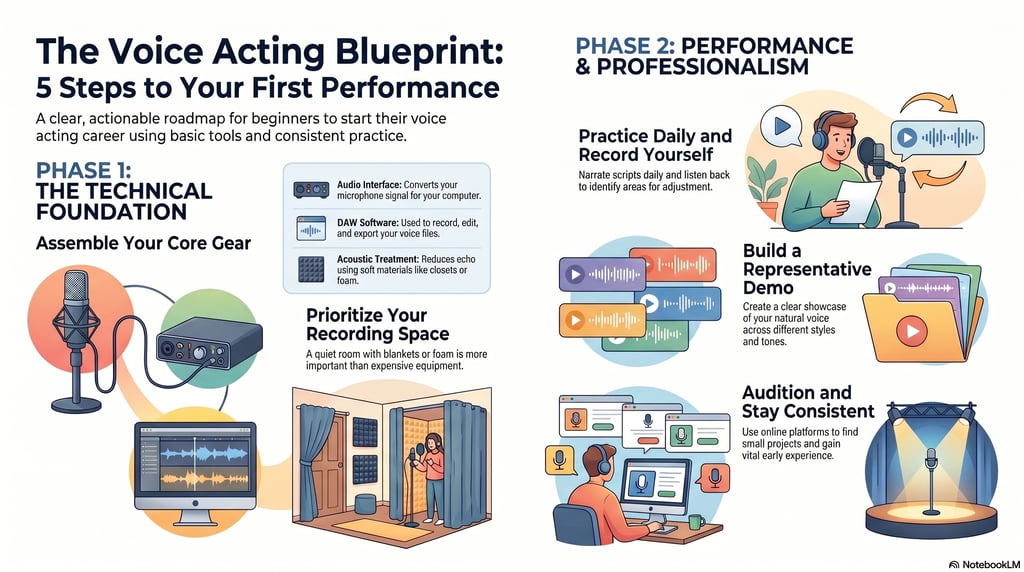
You don’t need an expensive studio to begin, but you do need a few essentials:
A microphone
An audio interface
Recording software (DAW)
This setup allows you to record and edit your own audio from home. Even a simple setup is enough to get started and begin improving.
Just as important as your gear is your recording space. A quiet, treated room will make a bigger difference than expensive equipment. Try to reduce echo and background noise as much as possible using soft materials like blankets, foam, or even a closet.
Practicing and Building Skill
The fastest way to improve is by doing the work consistently. Practice reading out loud every day, even if it’s just for a few minutes.
You can:
Read scripts you find online
Practice narrating books or articles
Experiment with different tones and styles
This helps you develop control over your voice and become more comfortable performing.
Many people interested in voiceover start by recording themselves and listening back. It may feel uncomfortable at first, but it’s one of the best ways to improve. You’ll quickly hear what works and what needs adjustment.
Exploring Different Styles
Voice work covers a wide range of styles, and it’s worth exploring different areas to see what fits you best.
Some common paths include:
Narration and storytelling
Character and animation work
Commercial-style reads
Interactive and game-based roles
If you’re interested in voice acting for video games, try practicing character lines and emotional delivery. Games often require strong, believable performances that match the tone of the story.
Trying different styles will help you understand your strengths and where you want to focus.
Creating a Demo
At some point, you’ll want to create a demo to showcase your abilities. This is what people will listen to when considering you for a project.
A good demo should:
Be clear and easy to listen to
Show your natural voice
Include a few different styles or tones
Your demo doesn’t need to be perfect when you’re starting out. It just needs to represent where you are right now.
Finding Opportunities
Once you have some practice and a demo, you can start looking for work. There are many ways to approach this, and it often takes a combination of strategies.
You can:
Audition on online platforms
Reach out to creators directly
Collaborate with others on small projects
At first, your goal should be to find voice over work that helps you gain experience. Even small projects can teach you a lot and help you build confidence.
As you improve, better opportunities will start to open up.
Learning from Others
One of the best ways to grow is by learning from people who are already doing what you want to do.
You can:
Listen to professional performances
Watch behind-the-scenes content
Take classes or coaching sessions
Studying others helps you understand what makes a performance effective and gives you ideas you can apply to your own work.
Bonus tip: Try joining a group on Skool or https://learnvoiceacting.com/
Staying Consistent
Consistency is what makes the biggest difference over time. You don’t need to spend hours every day, but you do need to show up regularly.
Focus on:
Practicing often
Recording and reviewing your work
Trying new approaches
If you stay consistent, your improvement will come naturally. What feels difficult now will become much easier with time.
Final Thoughts
Becoming a voice actor isn’t about having everything in place from the start. It’s about building your skills step by step and learning as you go.
Start with what you have. Practice regularly. Look for opportunities, and don’t be afraid to put yourself out there.
The most important thing you can do right now is simple:
👉 Start recording and keep going.

Listen to My Work
Want to hear my work in action? Take a listen to my latest projects, including audiobook performances, voice-over work, and creative audio content. As an audiobook narrator, I’m always working to improve my performance, storytelling, and production quality with every project.
👉 Check out my audiobook and featured voice work here.
Let’s Work Together
If you’re interested in voice acting, demo production, or creative collaboration, feel free to reach out. I’m always happy to connect with other creatives and work on exciting projects.
👉 Contact me and let’s create something great together.
Related Articles
Looking for more tips on voice acting, recording, and creative audio work? Check out some of the related blog posts below for helpful advice on demo reels, recording equipment, audiobook narration, and getting started in the world of voice over.
👉 Explore more articles and continue building your skills as a voice actor and creator.