How Can I Create a Professional Demo Reel for Voice Acting?
Learn how to create a professional voice acting demo reel with the right equipment, clean audio, strong performances, and real-world advice from experience. From recording tips to avoiding common mistakes, this guide will help you build a demo that stands out.
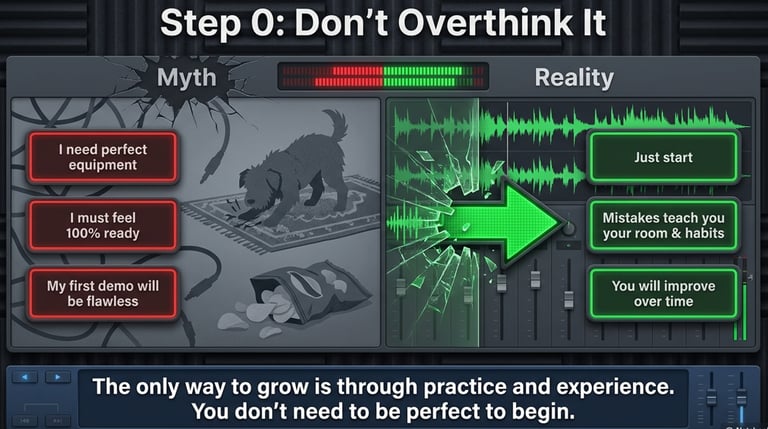
Your Demo Reel Doesn’t Need to Be Perfect
Creating your first voice acting demo reel can feel intimidating. You start wondering things like:
“Am I good enough yet?”
“What equipment do I need?”
“Should I hire someone?”
“What if it sounds bad?”
The truth is, almost everyone feels that way in the beginning. The important thing is to start anyway.
A demo reel is one of the most important tools you’ll have as a voice actor. It’s often the first impression someone gets of your abilities, and it gives people a quick idea of your range, personality, and audio quality.
The good news is you don’t need to be perfect to begin. You just need to take the first step and keep improving over time.
Decide What Kind of Demo You Want
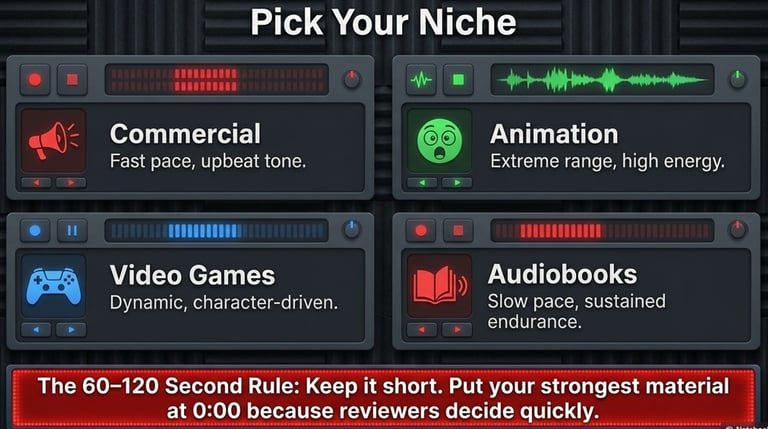
One of the biggest mistakes beginners make is trying to put everything into one demo reel.
Instead, think about the type of work you want to pursue.
Different demo types include:
Commercial
Animation
Video game characters
Audiobook narration
General voiceover work
Each style has a different tone and pacing. A commercial reel sounds very different from an animation reel, and an audiobook sample requires a completely different delivery compared to game dialogue.
In most cases, it’s better to create focused demos rather than one giant reel trying to do everything.
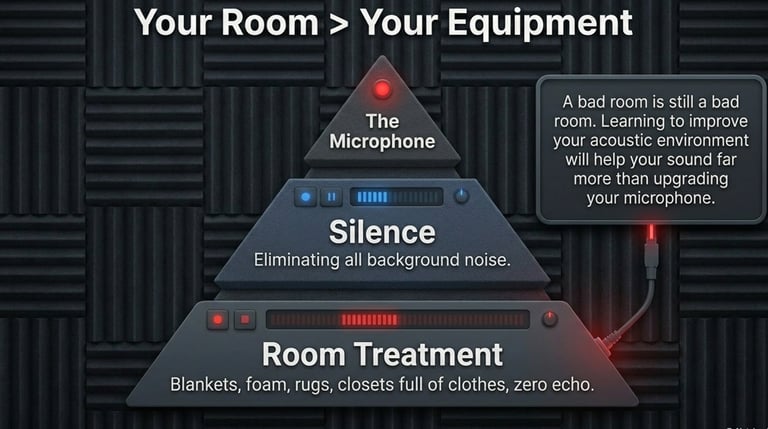
Your Room Matters More Than Your Equipment
One of the biggest mistakes beginners make is trying to put everything into one demo reel.
Instead, think about the type of work you want to pursue.
Different demo types include:
Commercial
Animation
Video game characters
Audiobook narration
General voiceover work
Each style has a different tone and pacing. A commercial reel sounds very different from an animation reel, and an audiobook sample requires a completely different delivery compared to game dialogue.
In most cases, it’s better to create focused demos rather than one giant reel trying to do everything.
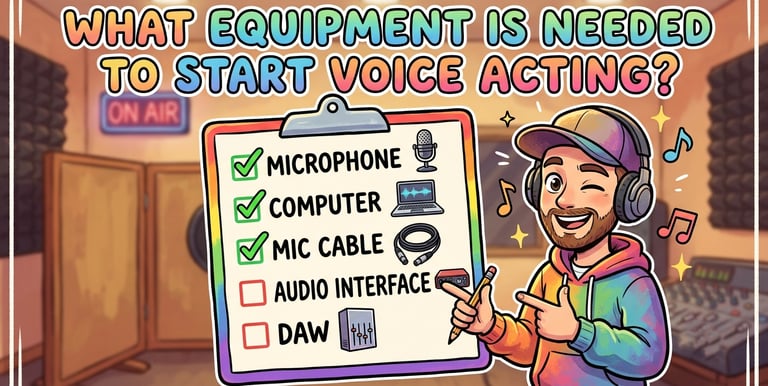
The Equipment I Personally Use
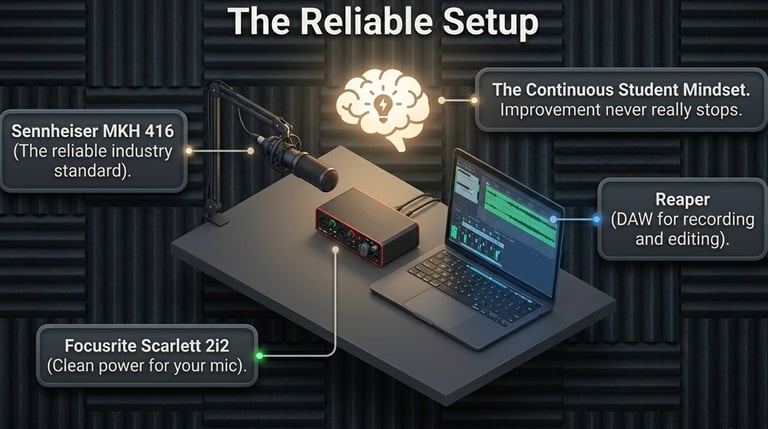
Your setup doesn’t have to be extremely expensive, but you do need reliable gear.
My current setup includes:
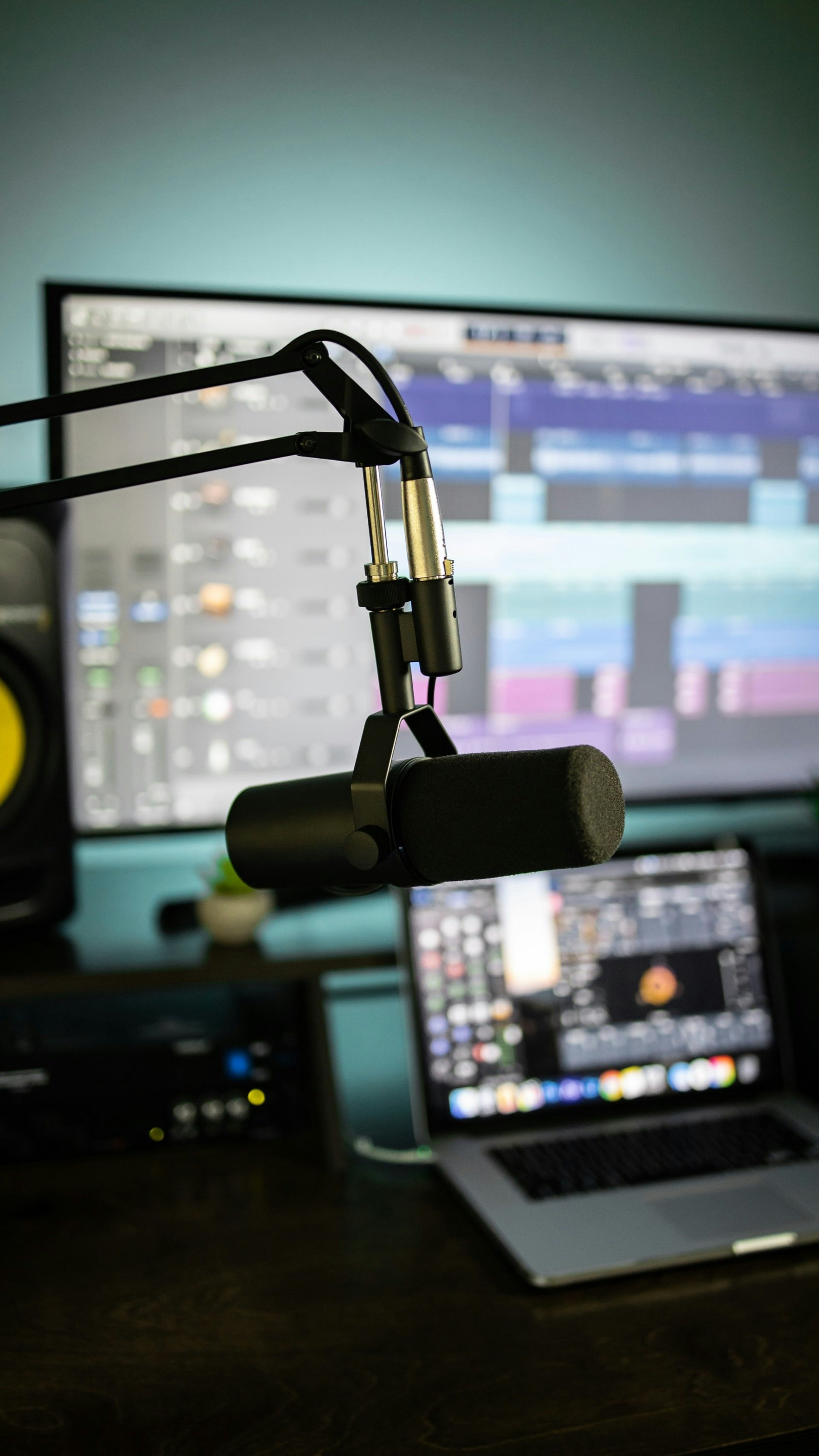
Reaper for recording and editing
Sennheiser MKH 416 microphone
Focusrite Scarlett 2i2 interface
I also edit my own audio and spend a lot of time learning inside my DAW. Honestly, I still consider myself a student because there’s always more to learn.
That mindset is important in voice acting. Improvement never really stops.
Learn Basic Audio Editing
Recording the lines is only part of the process. Editing matters too.
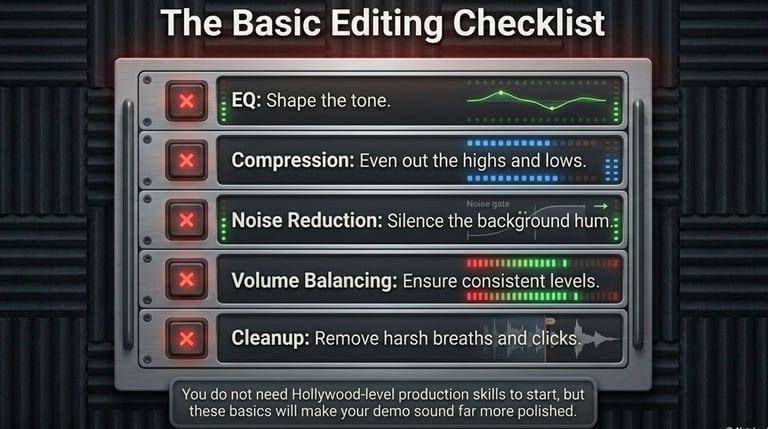
You should learn:
Basic EQ
Compression
Noise reduction
Volume balancing
Cleaning up breaths and clicks
You do not need Hollywood-level production skills to start, but understanding the basics will help your demo sound far more polished.
Over time, you’ll develop your own workflow and style.
Don’t Overdo Music and Sound Effects
Background music and sound effects can absolutely improve a demo reel. They help create energy, atmosphere, and emotion.
But there’s a balance.
Too much music or overly loud sound effects can distract from the actual performance. Your voice should always be the focus.
Think of it like this:
You want the audio elements to support the performance—not overpower it.
Find the “Goldilocks zone” where everything works together naturally.
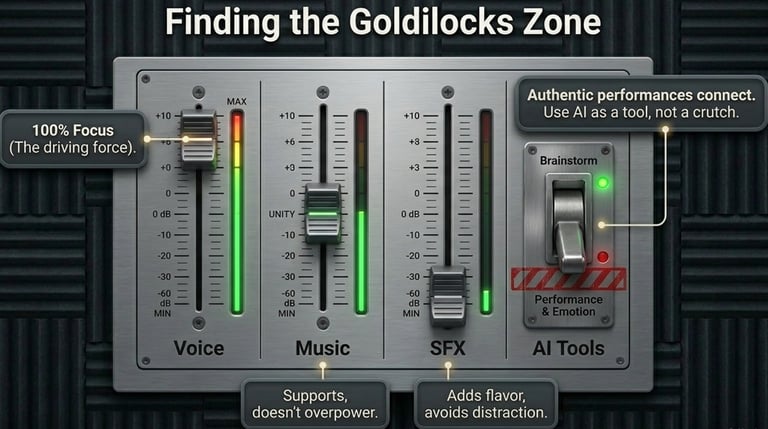
AI tools can be useful when brainstorming scripts or ideas, and there’s nothing wrong with using them as part of your process.
But AI should not replace your creativity.
Use AI as a tool, not a crutch.
You are still the driving force behind:
The performance
The emotion
The pacing
The personality
At the end of the day, people connect with authentic performances, not generated text alone.
AI Can Help — But Don’t Rely on It Completely
Should You Hire Someone to Produce Your Demo?
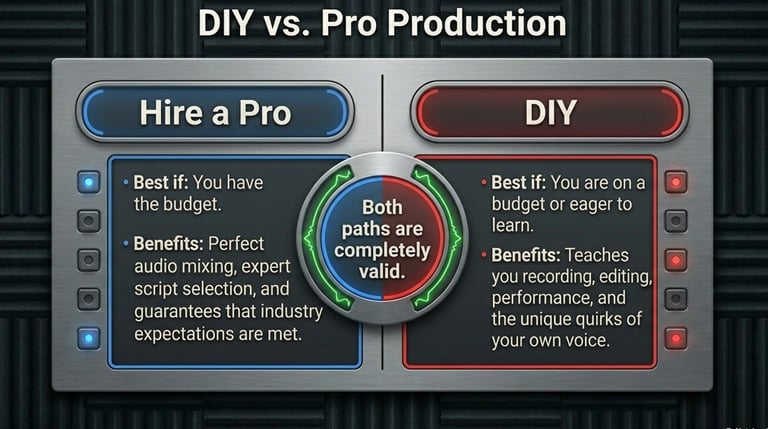
Honestly? If you can afford it, hiring someone can be a great investment.
Professional demo producers understand:
Script selection
Audio mixing
Pacing
Industry expectations
They can often help your demo sound more polished and competitive.
That said, creating your own reel is also valuable because it teaches you a lot about recording, editing, and performance. Both approaches are completely valid.
My First Demo Was Rough
My first demo attempt definitely was not perfect.
While I was recording, my dog was fluffing the carpet in the next room, and my wife was upstairs eating chips in the kitchen. At the time, I didn’t realize how much little sounds like that could ruin a recording.
It was frustrating, but honestly, those mistakes taught me a lot.
Once you record and listen back carefully, you start learning:
What your room sounds like
What noises your mic picks up
What habits need improvement
That experience is part of the process.
(Also, for future sessions, maybe give your wife something quieter to snack on.)
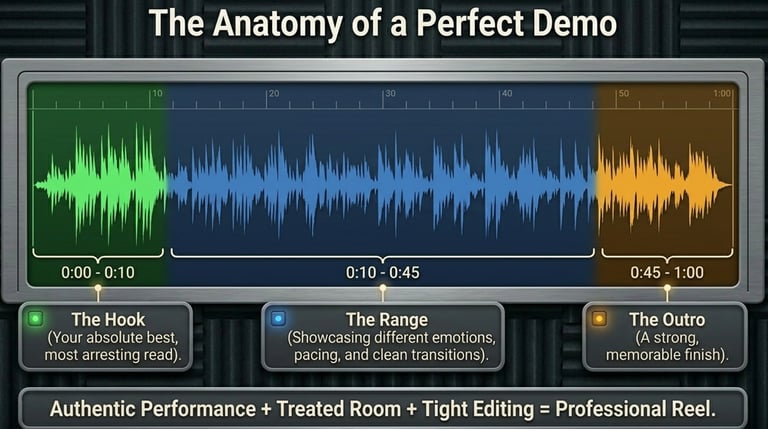
How Long Should a Demo Reel Be?
In most cases, around 60–120 seconds is plenty.
People reviewing demos usually decide very quickly whether they want to keep listening. That means your strongest material should appear early.
Try to include:
Variety
Different emotions or styles
Clean transitions
Strong pacing
Most importantly, make the reel specific to the type of work you want.
Don’t Wait Until You Feel “Ready”
This is important.
A lot of people delay making a demo because they think they’re not ready yet. But honestly… are we ever really fully ready?
The best thing you can do is jump in and start.
Your first demo probably won’t be your last, and that’s completely okay. Every version teaches you something new and helps you improve.
The only way to grow is through practice and experience.
Final Thoughts
Creating a professional demo reel takes time, patience, and a willingness to learn. You’ll improve your audio, refine your performances, and discover what works best for your voice over time.
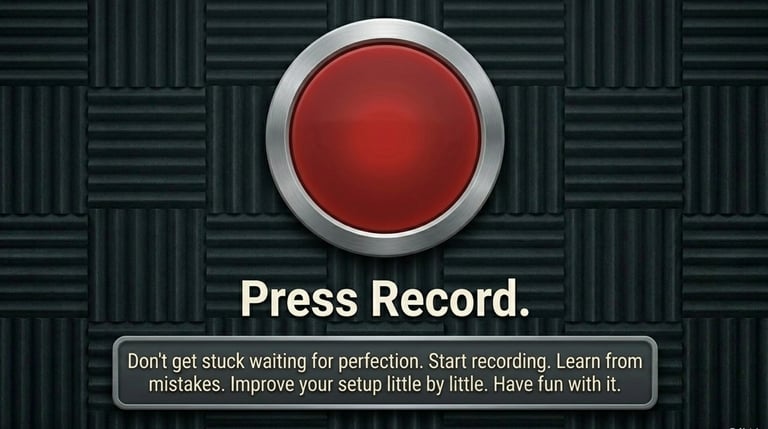
Don’t get stuck waiting for perfection.
Start recording. Learn from mistakes. Improve your setup little by little, and continue building your skills.
And most importantly—have fun with it.
Listen to My Work
Want to hear my work in action? Take a listen to my latest projects, including audiobook performances, voice-over work, and creative audio content. As an audiobook narrator, I’m always working to improve my performance, storytelling, and production quality with every project.
👉 Check out my audiobook and featured voice work here.
Let’s Work Together
If you’re interested in voice acting, demo production, or creative collaboration, feel free to reach out. I’m always happy to connect with other creatives and work on exciting projects.
👉 Contact me and let’s create something great together.
Related Articles
Looking for more tips on voice acting, recording, and creative audio work? Check out some of the related blog posts below for helpful advice on demo reels, recording equipment, audiobook narration, and getting started in the world of voice over.
👉 Explore more articles and continue building your skills as a voice actor and creator.